How Digital Payments Are Driving Business Growth for Indian Merchants
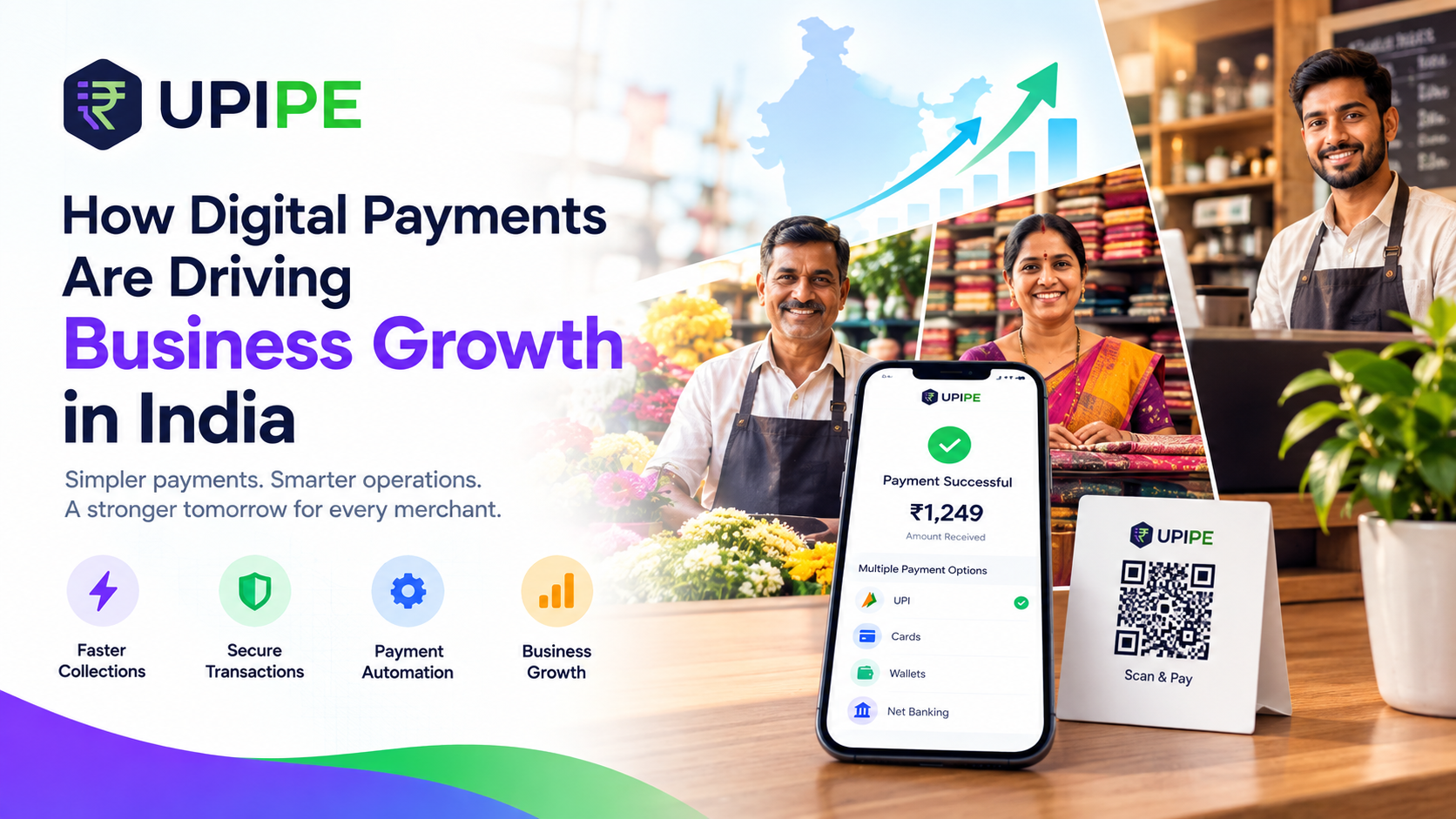
Across India, a quiet but powerful transformation is changing the way businesses operate. From neighbourhood stores and street-side vendors to traditional family businesses, restaurants, retailers, and rapidly expanding brands, merchants are increasingly turning to digital payments to make everyday transactions faster, simpler, and more convenient.
Digital payments are no longer just an alternative to cash. They have become an important part of modern business operations, helping merchants collect payments, track transactions, reduce manual work, and create a smoother experience for their customers.
Platforms like UPIPE are contributing to this evolving digital payment ecosystem by providing businesses with tools designed around modern payment collection and transaction management.
Whether it is a small shop in Delhi, a textile business in Mysuru, a food outlet in Mumbai, or an online store serving customers across India, the need is increasingly similar: businesses want payment systems that are convenient, reliable, and easier to manage.
Let's look at how digital payments are helping different types of Indian merchants move toward a more efficient way of doing business.
How Digital Payments Are Helping Small Indian Merchants
Consider a small flower vendor operating near a busy temple or local market.
Every morning begins early. Customers arrive throughout the day, and many prefer to pay digitally rather than search for cash or exact change.
For a merchant, accepting digital payments can remove several everyday inconveniences.
Instead of worrying about whether a customer has sufficient cash, the merchant can offer a convenient digital payment option. Once the transaction is completed, the payment information can become part of a more organized record of daily collections.
This can be especially useful for small businesses where the owner personally handles sales, inventory, customer service, and payment management.
With a structured payment solution such as UPIPE, merchants can build more organized payment workflows around their daily operations.
The benefit isn't simply convenience at the counter. It can also mean spending less time dealing with manual payment-related tasks.
How Digital Payments Are Supporting Traditional Family Businesses
Across India, thousands of businesses have been built over generations.
From saree and textile stores to jewellery shops, handicraft businesses, furniture stores, and local retail outlets, traditional businesses are increasingly adapting to changing customer expectations.
Today's customers often want multiple payment options and a quick checkout experience.
For a family-run business, digital payments can help modernize the transaction process without changing the identity or values of the business itself.
Imagine a third-generation textile store where the owner previously had to personally oversee many payment-related activities.
With a more organized digital payment workflow, staff members can manage transactions while the owner focuses on customers, inventory, suppliers, and business expansion.
This is one of the most important advantages of digital transformation: **technology can give business owners more time to focus on the business rather than routine operational tasks.
How Digital Payments Help Growing Retail Chains
For businesses with multiple outlets, payment management becomes more complicated as transaction volumes increase.
A single store may process dozens or hundreds of payments every day. A growing chain can handle significantly more transactions across different locations.
At this scale, businesses need more than a basic payment method. They need better visibility into their payment operations.
A modern payment infrastructure can help businesses organize activities such as:
* Payment collection
* Transaction tracking
* Payment status monitoring
* Order-linked payments
* Payment reconciliation
* Webhook notifications
* Payment reporting
With UPIPE, businesses can build payment workflows around tools such as dynamic QR codes, payment links, APIs, and webhook-based transaction updates.
This can help growing businesses create a more connected approach to payment management.
Why Faster Checkout Matters for Indian Businesses
Customers don't want to spend unnecessary time at checkout.
Whether someone is buying flowers, clothing, groceries, electronics, food, or services, they generally expect the payment process to be quick and convenient.
A slow or confusing payment experience can affect the overall customer journey.
Digital payment solutions can reduce friction by giving customers convenient ways to complete their purchases.
For merchants, faster payment processing can also help reduce queues and keep daily operations moving.
This becomes particularly important for high-footfall businesses such as:
* Restaurants
* Cafes
* Retail stores
* Supermarkets
* Ice cream outlets
* Entertainment venues
* Local markets
* Service businesses
When payment becomes a seamless part of the customer journey, both the merchant and customer can benefit.
How UPIPE Can Help Businesses Build Smarter Payment Workflows
Accepting a digital payment is only one part of modern payment management.
Businesses may also need to know whether a transaction was successful, whether an order has been paid, whether a payment is pending, and whether transaction information has been correctly recorded.
This is where payment infrastructure becomes increasingly important.
**UPIPE** is built around modern payment collection and transaction-management workflows, helping businesses work with features such as:
Dynamic QR Payments
Dynamic QR codes can be connected with specific payment or order information, making them useful for businesses that want a more structured approach to payment collection.
### **Payment Links**
Payment links can provide businesses with another way to request and collect payments from customers remotely.
This can be useful for online businesses, service providers, freelancers, and businesses that communicate with customers through digital channels.
### **Real-Time Payment Tracking**
Payment tracking can help merchants understand the status of transactions without relying entirely on manual checking.
This becomes increasingly important as transaction volumes grow.
### **APIs and Webhooks**
Businesses with their own websites, applications, or software systems can use APIs and webhooks to connect payment events with their existing technology infrastructure.
This can help create automated workflows around payment status updates and transaction events.
---
# **Why Payment Automation Matters for Growing Businesses**
Imagine a business processing hundreds or thousands of transactions every day.
Checking each transaction manually can consume significant time and resources.
Payment automation can help reduce repetitive tasks by connecting payment events with other business processes.
For example, when a payment status changes, a connected system can receive an update through a webhook and use that information within the relevant business workflow.
This can help businesses reduce manual intervention and improve operational efficiency.
With **UPIPE**, businesses can explore payment automation workflows that connect payment collection with their broader digital infrastructure.
The objective is simple: **make payment operations easier to manage as the business grows.**
---
# **Digital Payments Are Helping Businesses Beyond the Checkout Counter**
The impact of digital payments extends far beyond the moment a customer makes a payment.
For merchants, digital payment infrastructure can influence several areas of daily operations.
### Better Transaction Visibility
Digital records can make it easier to understand payment activity and monitor transactions.
### Reduced Manual Work
Automated payment updates can reduce repetitive tasks associated with checking and recording payments.
### Improved Customer Experience
Convenient payment options can help customers complete purchases more easily.
### Easier Business Management
Organized payment information can help merchants manage day-to-day operations more efficiently.
### Support for Business Growth
As transaction volumes increase, scalable payment infrastructure can help businesses adapt to changing operational requirements.
---
# **From Local Shops to Digital-First Businesses**
India's business ecosystem is incredibly diverse.
A small merchant may operate from a single shop, while another business may have multiple outlets across several cities. An online seller may serve customers nationwide without operating a physical store at all.
Despite these differences, digital payment technology is becoming a common part of their operations.
A local retailer can use digital payments to make checkout easier.
An e-commerce business can use payment links and APIs.
A growing chain can use transaction tracking and reconciliation workflows.
A service provider can send payment requests remotely.
This flexibility is one of the reasons digital payment infrastructure has become so important to modern Indian commerce.
---
# **The Future of Digital Payments in India**
The next stage of digital payments will likely focus on much more than simply moving money from one account to another.
Businesses are increasingly looking for payment systems that combine:
**Convenience + Automation + Tracking + Integration + Reliability**
Payment infrastructure will increasingly connect with websites, mobile applications, order-management systems, accounting tools, CRM platforms, and internal business dashboards.
This means payments are becoming part of a larger digital business ecosystem.
For businesses preparing for future growth, investing in organized payment operations can therefore be an important step toward becoming more efficient and technology-driven.
---
# **How UPIPE Fits Into the Digital Payment Journey**
As businesses across India continue adopting digital-first operations, payment solutions need to evolve with them.
**UPIPE** provides tools designed to support modern payment collection and transaction workflows, giving businesses the flexibility to work with dynamic QR payments, payment links, APIs, webhooks, and payment tracking.
For a small merchant, this can mean a simpler payment process.
For an online business, it can mean better integration.
For a growing company, it can mean more structured payment operations.
And for businesses handling large transaction volumes, it can provide a foundation for building more automated payment workflows.
---
# **Final Thoughts**
Digital payments are changing the way Indian businesses collect money, manage transactions, and interact with customers.
From small local merchants to established retail businesses and rapidly growing digital brands, businesses across India are moving toward payment systems that are faster, more connected, and easier to manage.
The real opportunity lies beyond simply accepting digital payments. Businesses can use modern payment infrastructure to improve transaction visibility, reduce manual processes, automate workflows, and create a better customer experience.
With solutions such as **UPIPE**, businesses can build a more organized approach to digital payment collection and prepare their payment operations for future growth.